Older adults and cognitively or psychologically vulnerable people often experience challenges such as disorientation, anxiety, loneliness, and difficulties in managing daily routines. These situations can lead to increased stress, safety risks, and a reduced sense of autonomy, while also placing a significant burden on caregivers (Lee et al., 2021; Vahia et al., 2022).
Although digital health technologies are rapidly evolving, many existing solutions remain fragmented. Wearables and mobile health applications typically focus on either monitoring or single-purpose functions like reminders or emergency alerts, while emotional reassurance and cognitive orientation are rarely addressed in an integrated way (Ghorbani et al., 2022). This reveals a clear need for accessible, low-threshold systems that combine safety, structure, and emotional support.
ReMINDme is a conceptual Digital Health project that explores how wearable technology can support older adults and cognitively or psychologically vulnerable populations in everyday life. The goal of our project is a smartwatch-based digital companion that will provide orientation, emotional reassurance, and daily structure. By combining reminder-based support for routines such as medication, hydration and appointments with simple conversational interactions and emergency functions, ReMINDme aims to reduce anxiety, enhance autonomy, and increase safety.
Integrating perspectives from Digital Healthcare, Mental Health, and Human-Computer Interaction, ReMINDme follows a strongly user-centered design approach. Particular emphasis is placed on accessibility and usability for older users, including clear interfaces, high contrast visuals, large interaction elements, and optional voice control, acknowledging age-related cognitive, sensory, and motor limitations.
The project will be developed within an agile framework and conceptualized as a Minimum Viable Product on a theoretical level. Rather than focusing on technical implementation, ReMINDme will emphasize conceptual design, ethical considerations and realistic feature design through clearly defined key functions, user stories, and acceptance criteria — creating a solid foundation for future development and research.
References
- Lee, H., Lee, S. A., & Kim, J. (2021). Digital cognitive aids for older adults with cognitive impairment. Journal of Medical Internet Research.
- Vahia, I. V., et al. (2022). Digital technologies for emotional and behavioral support in older adults. American Journal of Geriatric Psychiatry.
- Ghorbani, A., et al. (2022). Mobile health applications for supporting individuals with cognitive impairment. International Journal of Medical Informatics.
A project at the St. Pölten University of Applied Sciences
Master Program Digital Healthcare
Project Coaches: Kidritsch Anita (Stellvertretende Studiengangsleiterin Citizen-Centered Digital Health and Social Care* (MA))
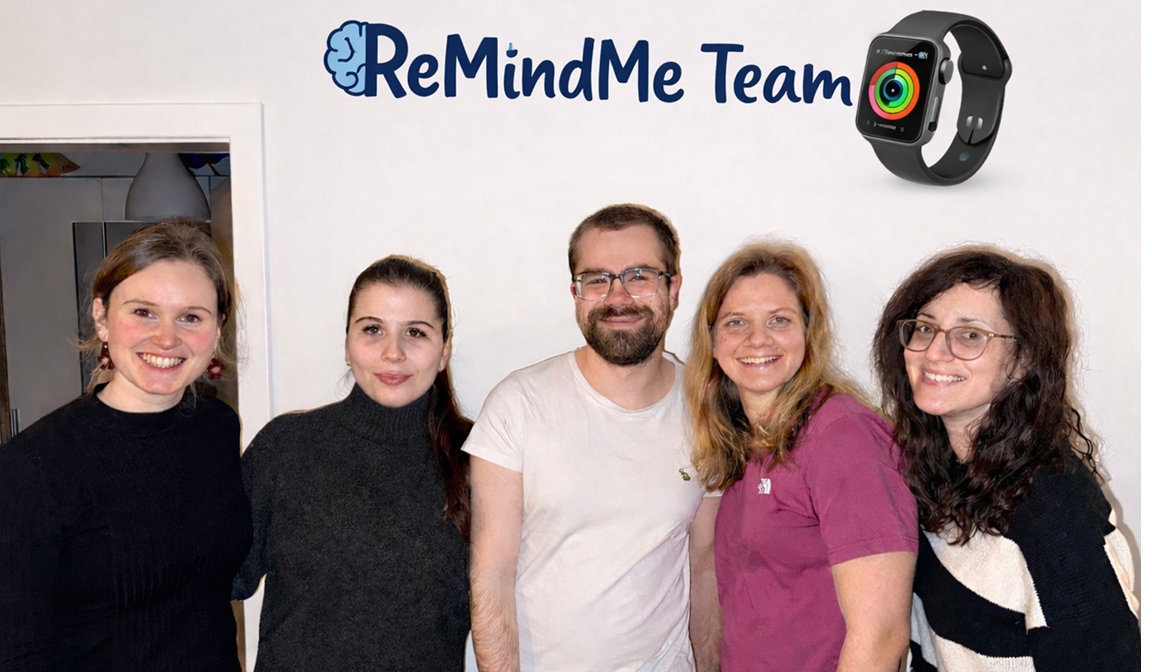
Team members: Broufa Maria, Giessenbacher Michael, Pecinka Alexandra, Schally Lisa, Simai Aida-Rada