
Evaluation and Redesign of Data Visualization in Operating Room Management Systems: A Mixed-Method Design Study
Aim and Research Question(s)
This work aims to investigate how data visualizations in operating room (OR) management systems can support situational awareness and role-specific information needs. Two research questions were formulated:
- What visualization-related requirements can be identified among OR team members regarding the visualization of an OR management dashboard?
- What differences in interaction behaviour, usability perceptions, and user preferences can be observed among OR team members when comparing a general OR dashboard prototype with a role-adapted OR dashboard prototype?
Background
In the OR, effective decision-making depends on situational awareness (Endsley, 1995). Despite the potential of perioperative dashboards to support workflow coordination (Joseph et al., 2020), role-specific information needs and usability remain underexplored.
Methods
- Design Study Methodology
- 8 semi-structured expert interviews + visualization literacy
- Iterative development of 1 general and 3 role-adapted dashboards
- Evaluation (n = 8): Task-based testing + think-aloud protocol, System Usability Scale (SUS) & Preference questionnaire
Results and Discussion
- Role-specific information needs were identified across different professional roles.
- Participants perceived the role-adapted dashboard as providing more relevant information at a glance.
- Mean SUS: 86.6 (General) vs. 94.4 (Role-Adapted).
- 62.5% preferred the role-adapted dashboard, 37.5% the general dashboard.
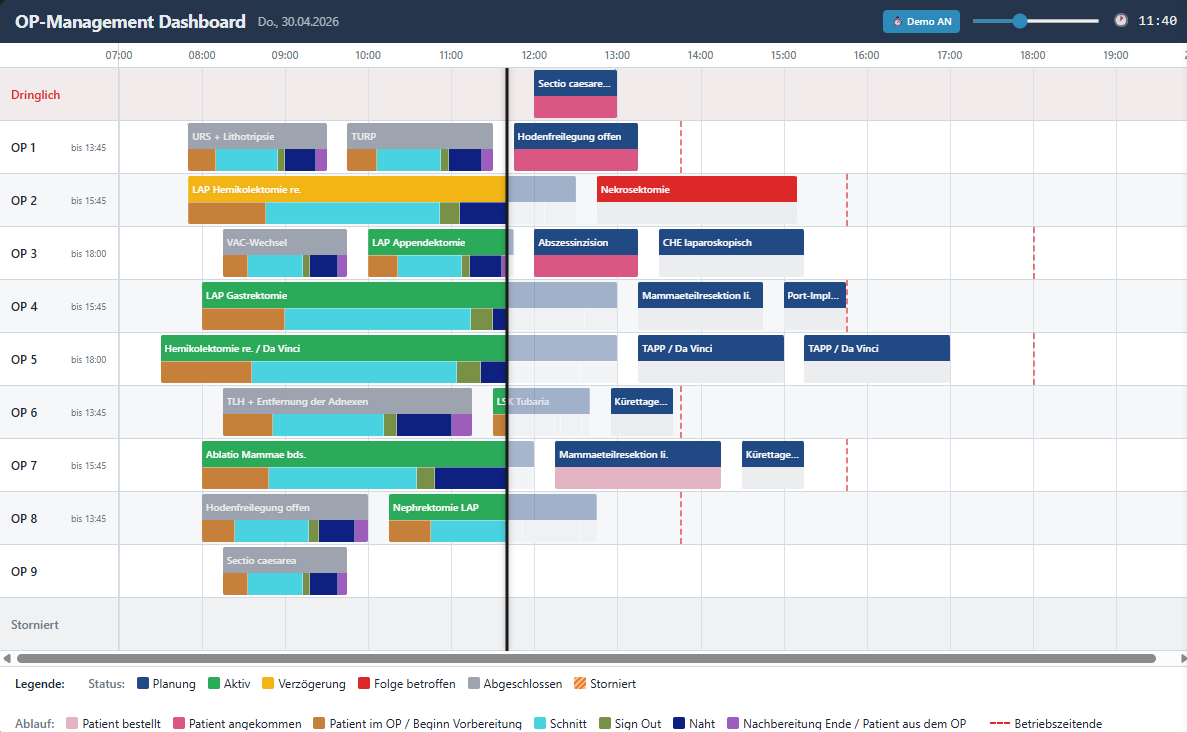 Figure 1. General OR dashboard. Source: Author with the tool Lovable
Conclusion
The findings indicate that OR team members require clear, structured, and role-specific information to support workflow coordination and situational awareness. Role-adapted dashboards may enhance information access in the OR, while highlighting the need to balance information richness and visual simplicity.
References
Endsley, M. R. (1995). Toward a theory of situation awareness in dynamic systems. Human Factors: The Journal of the Human Factors and Ergonomics Society, 37(1), 32–64. https://doi.org/10.1518/001872095779049543
Joseph, T. T., Wax, D. B., Goldstein, R., Huang, J., McCormick, P. J., & Levin, M. A. (2020). A web-based perioperative dashboard as a platform for anesthesia informatics innovation. Anesthesia & Analgesia, 131(5), 1640–1645. https://doi.org/10.1213/ANE.0000000000005193