
Design, Implementation, and Evaluation of an Open-Source Modular Pipeline for Multimodal Biosignal Analysis
Aim and Research Question(s)
This thesis develops an open-source pipeline for reproducible multimodal biosignal analysis. The work was motivated by the EyeQTrack project, where physiological and behavioral signals must be processed consistently across studies. The main research question was: How can an open-source, modular pipeline architecture improve the reproducibility, usability, and comparability of multimodal biosignal analysis workflows in digital-health research?
Background
Multimodal studies combine ECG, eye tracking, EDA, EEG, and other signals [1]. Despite many open-source tools, workflows often remain fragmented across script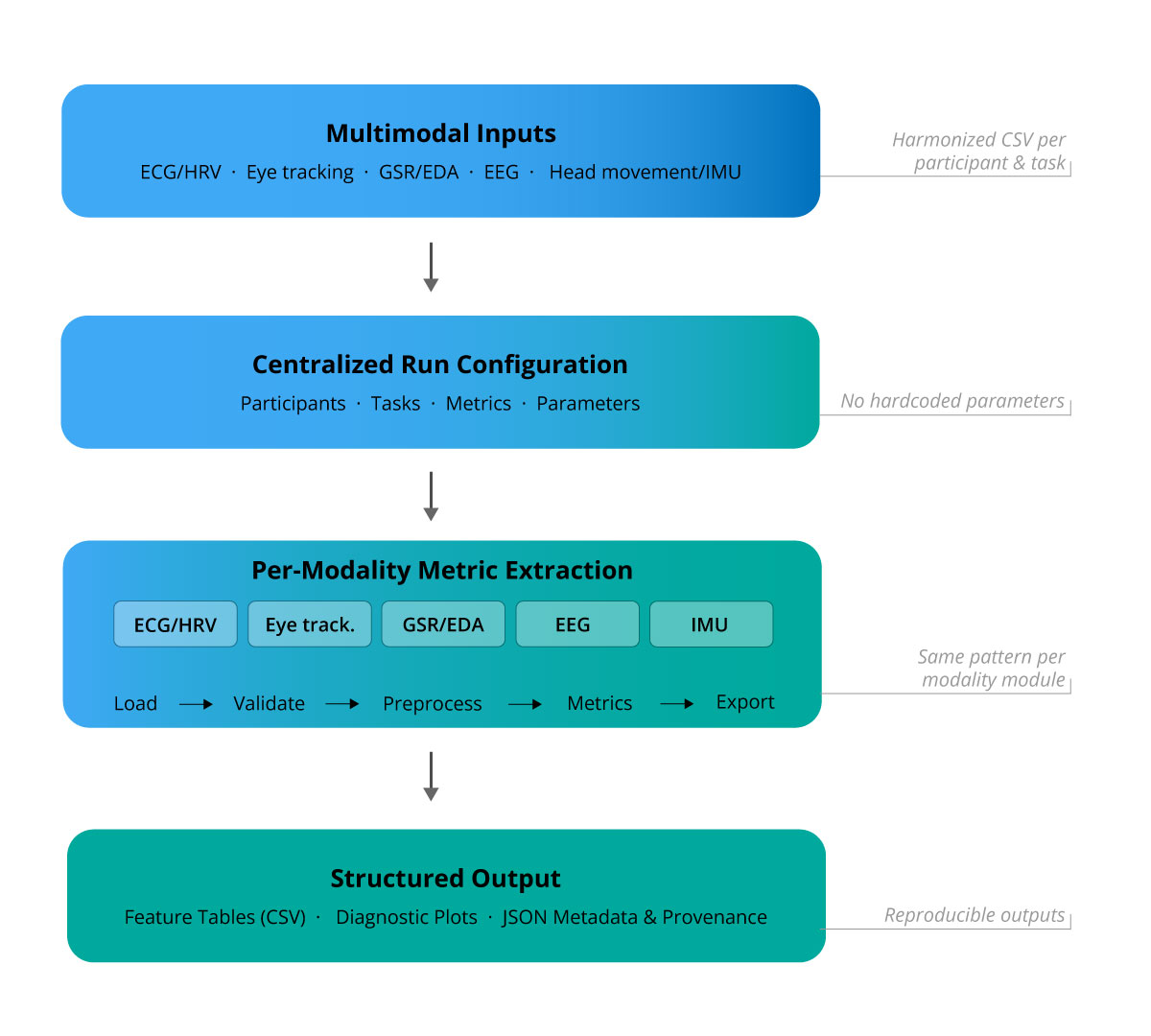 s and software packages. This lack of standardization reduces reproducibility, transparency, and comparability [2]. The proposed pipeline addresses these challenges through a configuration-driven and device-agnostic design.
Methods
A two-phase design-and-build study was conducted with six domain experts, where Phase 1 elicited requirements through questionnaires and Phase 2 evaluated the implemented prototype using practical tasks, UEQ ratings [3], and qualitative feedback. The resulting system is a modular Python pipeline with standardized inputs, processing, and outputs.
Results and Discussion
Experts ranked reproducibility and reliability as the most important requirements. All participants successfully completed the evaluation tasks, and UEQ results reached the Excellent benchmark for pragmatic quality. These findings suggest that the proposed architecture supports transparent and reproducible multimodal biosignal analysis.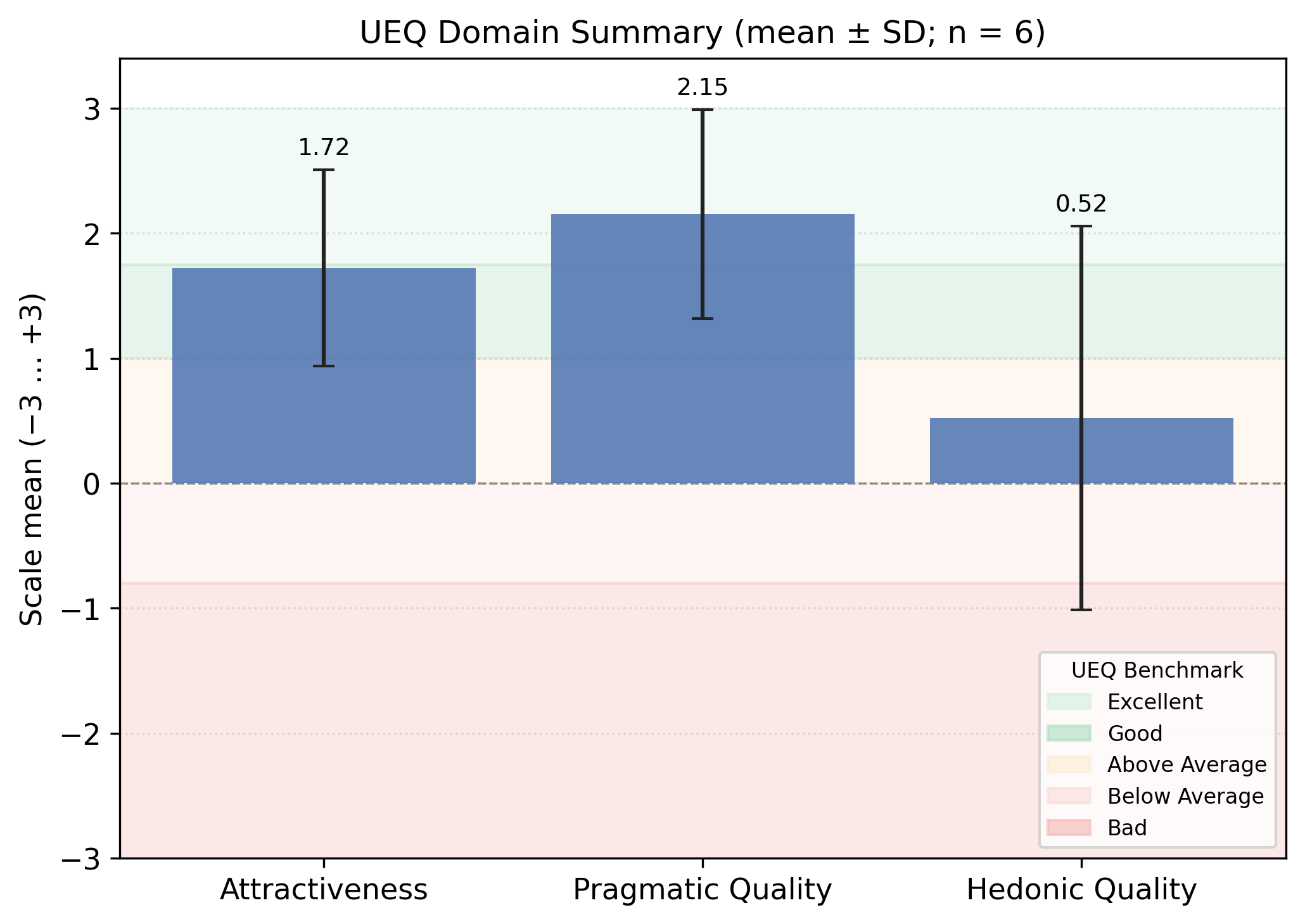
Conclusion
This work presents an open-source and modular pipeline for multimodal biosignal analysis. The prototype supports reproducible workflows through configuration-driven execution and standardized outputs. Expert feedback indicates strong usability and good alignment with researcher requirements. Future work should improve onboarding, audit trails, and support for additional modalities.
References
[1] P. L. Indrasiri et al., "VR Based Emotion Recognition Using Deep Multimodal Fusion With Biosignals Across Multiple Anatomical Domains," 2024. [2] A. Stupple et al., "The reproducibility crisis in the age of digital medicine," npj Digital Medicine, 2019. [3] M. Schrepp, UEQ Handbook, Version 11, 2023.