
Prototypical Development and Evaluation of an Application for Complex Regional Pain Syndrome (CRPS)
Aim and Research Question(s)
The aim of this master thesis was to design, develop, and evaluate a prototype mobile and web application, to support home-based rehabilitation for individuals with CRPS in addition to occupational therapy and physiotherapy. Research Questions:
- How do occupational therapists and physiotherapists evaluate the usability of the prototype?
- How do they perceive its clinical relevance, and what improvements do they suggest?
Background
CRPS is a chronic pain condition that typically develops after trauma or surgery and is associated with disproportionate pain, swelling, stiffness, autonomic changes, and functional impairment in an extremity (Harden et al., 2022). It requires a multidisciplinary rehabilitation approach, often including home-based exercises, but long-term adherence can be difficult. Digital health applications have shown potential to support rehabilitation in chronic pain populations (Pfeifer et al., 2020). However, no digital App specifically designed for CRPS was identified in the thesis. This gap provided the rationale for developing the prototype "CRPS-Coach".
Methods
First, a narrative literature review was contacted to identify evidence-based interventions suitable for digital delivery.
Second, based on these findings, the prototype "CRPS-Coach" was developed, including a pain diary, education, and three exercise-modules. The prototype was deliberately designed with a clear and intuitive user interface, progress trackers, and motivational features in order to reduce cognitive load, support usability, and encourage regular engagement with home-based exercises.
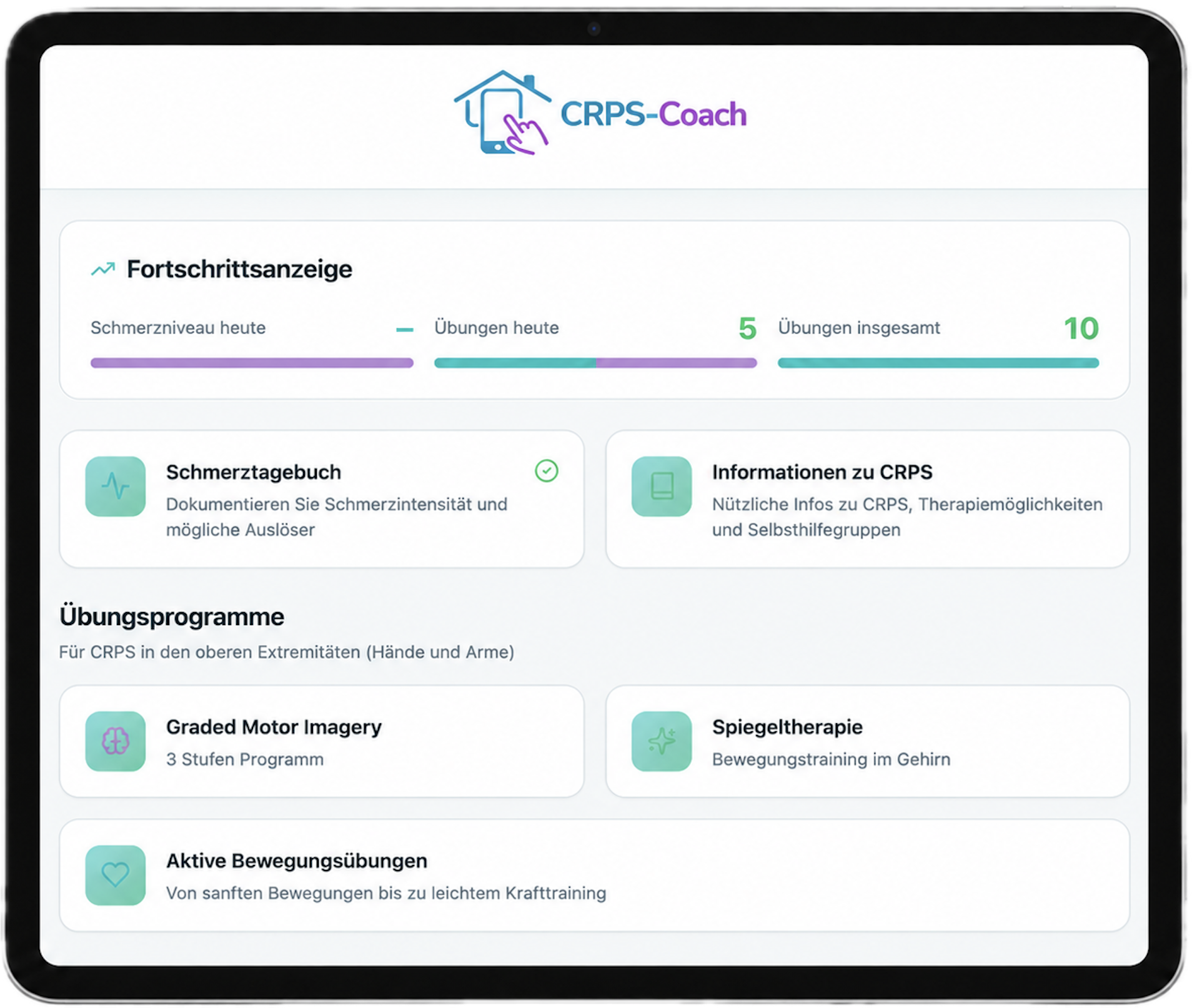 Figure: CRPS-Coach
Third, the prototype was evaluated in an exploratory mixed-methods pilot study with licensed occupational therapists and physiotherapists in Austria. Participants tested the live prototype and completed an anonymous online questionnaire including the System Usability Scale (SUS), and several additional quantitative and qualitative questions about perceived clinical relevance, liked and disliked aspects, perceived barriers and recommendations for future improvements.
Results and Discussion
The prototype showed high perceived usability, with a mean SUS score of 88.8 (n=32). In addition, 48.6% of participants rated the clinical relevance as very good, 45.7% as good, and 83% stated that they would recommend the prototype to their patients. Qualitative feedback highlighted the prototype’s clear structure, educational value, motivational design, and potential to support home exercise practice. Suggested improvements mainly concerned readability, accessibility, and personalization.
Conclusion
The results of this thesis indicate high perceived usability and positive perceived clinical relevance. The prototype may represent a promising therapist-guided digital support tool for home-based CRPS rehabilitation, but further refinement and patient-based evaluation are required.
References
Harden et al. (2022). Complex Regional Pain Syndrome: Practical Diagnostic and Treatment Guidelines, 5th Edition. Pain Medicine, 23(Supplement_1), S1–S53. https://doi.org/10.1093/pm/pnac046, Pfeifer et al. (2020). Mobile application-based interventions for chronic pain patients: A systematic review and meta-analysis of effectiveness. Journal of Clinical Medicine, 9(11), 3557. https://doi.org/10.3390/jcm9113557