
User Centered Design & Development and User Experience Evaluation of a Digital Respiratory Therapy Device with Gamified App for Patients with COPD
Aim and Research Question(s)
This thesis investigates the design, development, and evaluation of a digital respiratory therapy prototype for Chronic Obstructive Pulmonary Disease (COPD) patients and examines two central research questions:
- "Which design specifications are essential for a digitalized respiratory therapy prototype with a particular focus on the mobile application for patients with COPD?"
- "What are the differences in respiratory pressure measurement accuracy between the pressure values displayed by a digital controller sensor unit with app interface and those obtained from a conventional analogue pressure gauge, when both measurements are conducted using the same conventional setup?"
Background
In the year of 2021 Wang et al. [1] estimated a total number of 213.39 million prevalent cases of COPD worldwide and 5.18 million in Central Europe. Although there are different treatment and management options, it showed that within 12 months, 50% of the patients stopped their treatment [2]. Huang et al. [3] implemented a gamified inhaled medication programme, which led to improvements in medication adherence.
Methods
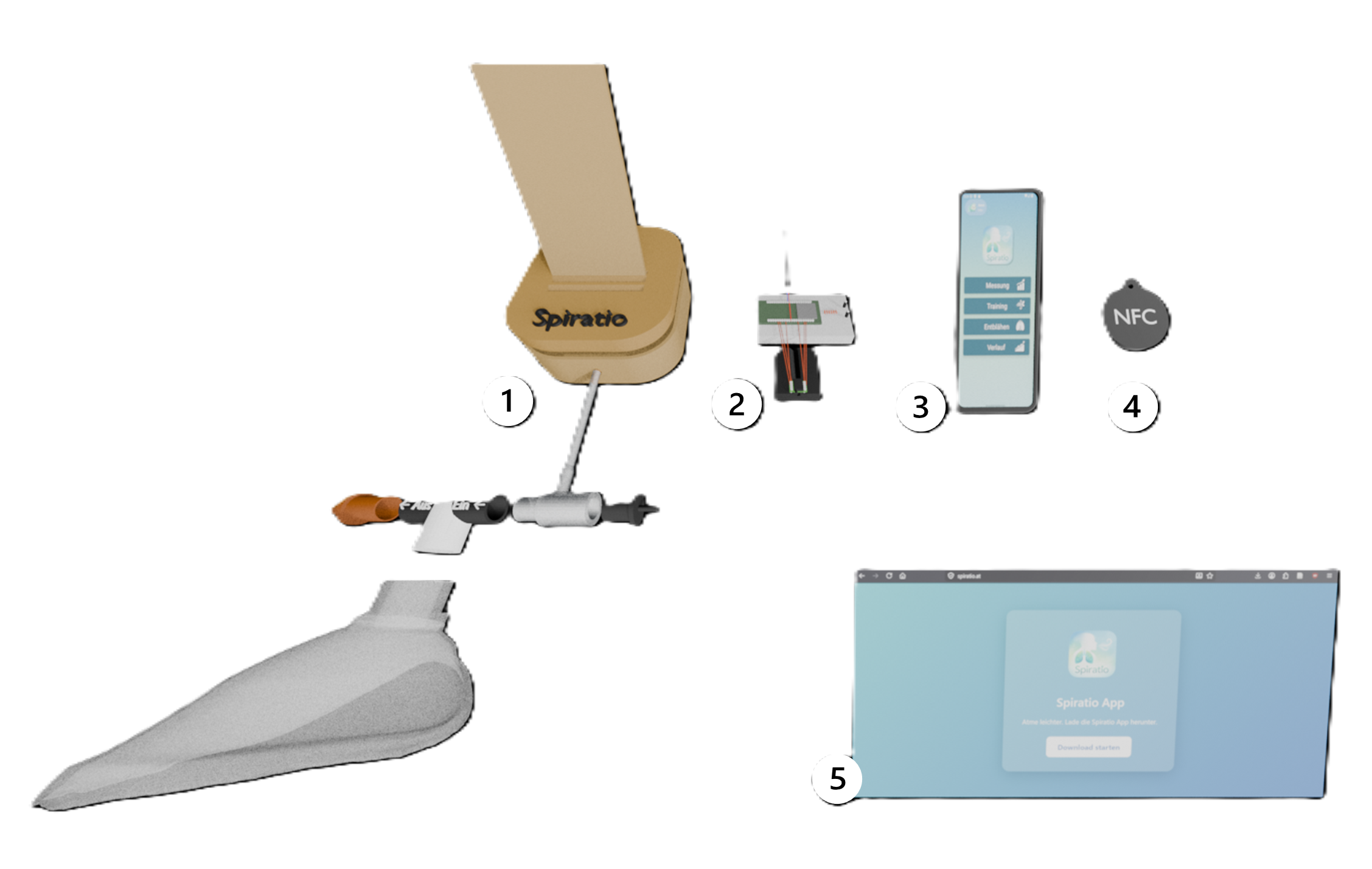 Figure 1) 1. Therapy Device and case; 2. Controller-Sensor Unit; 3. Mobile application; 4. NCF-based installation mechanism; 5 Download website
Using a user‑centred design approach, the prototype was iteratively refined through literature and market research, an online questionnaire, a focus group, and a thinking‑aloud usability test (see Figure 1).
Measurement accuracy was evaluated by comparing inspiratory & expiratory pressure readings from a conventional analogue PEP/RMT™ device and the prototype.
Results and Discussion
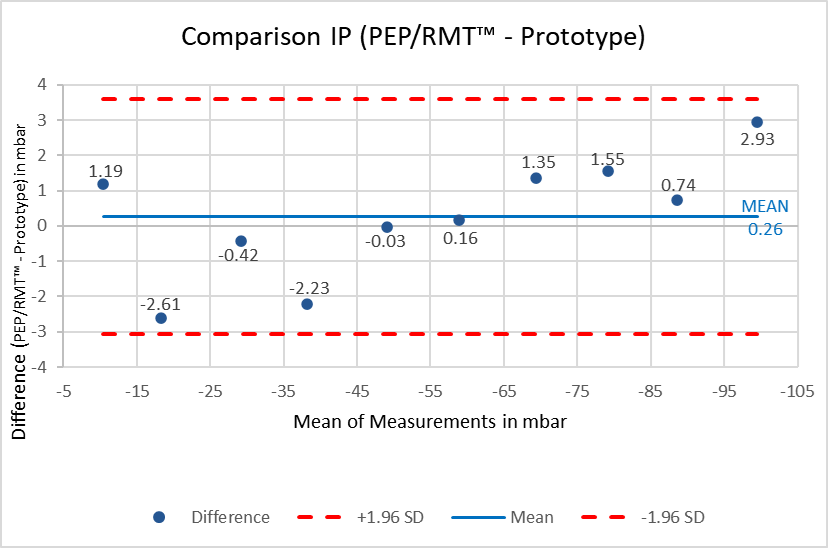 Figure 2) Inspiratory measurement comparison results
Results indicate that users value simple navigation, clear feedback, and motivating visual elements. Testing revealed barriers related to the starting of the prototype. The accuracy comparison showed close agreement between devices, suggesting reliable measurement performance see Figure 2.
Conclusion
This thesis demonstrates that a digital respiratory therapy system for COPD patients must prioritise simple navigation, clear feedback, and accessible, motivating design. The prototype met these requirements and showed clinically acceptable agreement with an analogue reference device.
References
- Wang, Z. et al. (2025). Respir Res, 26, 2. https://doi.org/10.1186/s12931-024-03051-2
- Dalon, F. et al. (2019). Int J Chron Obstruct Pulmon Dis, 14, 2905–2915. https://doi.org/10.2147/COPD.S222762
- Huang, X. et al. (2025). J Med Internet Res, 27, e65309. https://doi.org/10.2196/65309